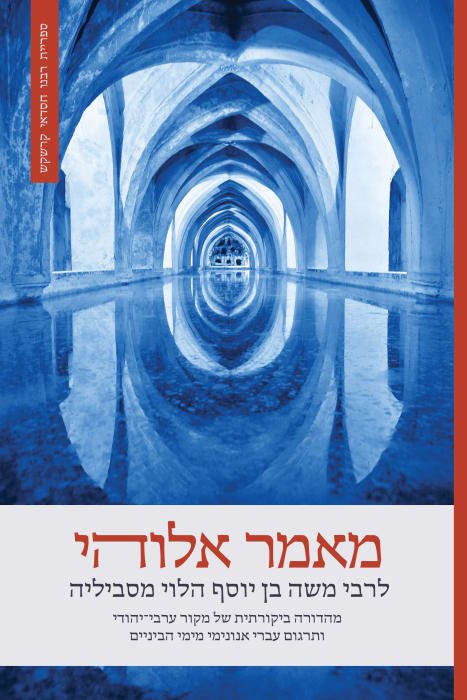
Light of the Lord
By Rabbi Hasdai Crescas
About the Book
In one of the most important works of medieval Jewish thought, Rabbi Hasdai Crescas—among the greatest Spanish rabbinic luminaries—unfolds his original philosophy regarding the fundamental principles of faith. His objective is to sever the link forged by Maimonides between the philosophical ideal of perfection—founded on intellectual perfection—and the Torah’s ideal of perfection: communion achieved through the love of God and divine service. To this end, Rabbi Hasdai undertook to dismantle Aristotle’s near-undisputed authority in physics and metaphysics, re-establishing the foundations of Judaism firmly upon the rabbinic tradition of the Sages.


Beyond the Print Tradition
For centuries, scholars studying Light of the Lord had to grapple with corrupted texts. Since it was first printed in Ferrara in 1555, subsequent editions accumulated scribal blunders, omissions, and editorial distortions that obscured the author's original intent. Later printings, despite editors' efforts, rested on the same faulty print genealogy and could not reconstruct the authentic text.
Ferrara
Vienna
Johannesburg
Jerusalem
The Most Authoritative Textual Witness
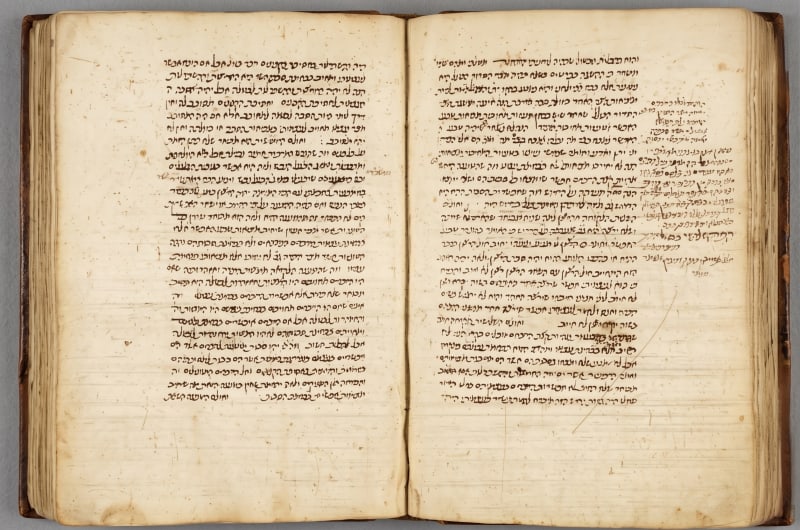
At the foundation of this critical edition lies the Florence Manuscript, regarded in scholarship as the most accurate surviving textual witness of Light of the Lord. Produced approximately five years prior to the final completion of the work, this singular codex allows the identification and rectification of distortions accumulated over generations, bringing the reader as close as possible to the authentic words of Rabbi Hasdai Crescas.

Scholarly Precision, Modern Accessibility
This edition harmonizes rigorous manuscript fidelity with clarity for the modern reader. The text, established on the Florence Manuscript, was collated against all major surviving witnesses. Beyond the refined Hebrew text, the volume incorporates an extensive reference system to Crescas's philosophical and rabbinic sources, alongside transparent textual apparatus notes displaying all significant variants.
No modernizing corrections or forced deciphering of abbreviations
Accurate philosophical source cross-references throughout
Direct notation of original manuscript folio numbering
Edition Features
- New typography and typesetting: Redesigned layout with clear, elegant typography formatted for fluent reading and study.
- Paragraph division and punctuation: Contemporary punctuation and paragraph structure to facilitate reading and conceptual progression.
- Comprehensive references and sources: Systematic identification of the author's sources from Rabbinic literature, Aristotle and his commentators, and medieval parallels.
- Critical apparatus: Collection of textual variants, manuscript collations, and historical glosses.
Specifications:
- Print length: 420 pages.
- Format: Paperback.
- Dimensions: 15.20 × 22.90 cm (6x9 inches).
- ISBN: 978-965-93323-7-3.